Block paving restoration and repairs in Nottingham
A complete approach for block paving affected by settlement, sand loss, organic growth and tired finishes.
Rebuild the weak areas, then restore the finish.
Block paving can settle where bedding has moved or water has washed material away. Relifting the affected area allows the level and support to be corrected before the surface is cleaned and re-sanded.
Our building and landscaping experience helps us distinguish a local repair from a wider construction problem.
For a broader review of the whole drive, see our driveway restoration assessment. If the blocks are sound and only need surface and joint care, explore block paving cleaning and re-sanding.
Relifting sunken blocks
Affected blocks are lifted so the low or uneven area can be prepared and corrected.
Bedding correction
The underlying material is levelled and compacted as appropriate before the existing blocks are relaid.
Cleaning and jointing
Once repairs are complete, the surface can be cleaned and replenished with kiln-dried jointing sand.
Finish and sealing review
Edges, drainage and optional sealing are assessed as part of the agreed restoration plan.
Localised settlement needs a physical repair
A sunken area cannot be made level with sand brushed over the top. The paving needs to be lifted, the cause and bedding considered, and the blocks relaid to an appropriate fall.
Where the problem points to a failed sub-base or major drainage issue, we explain the wider work that may be necessary.
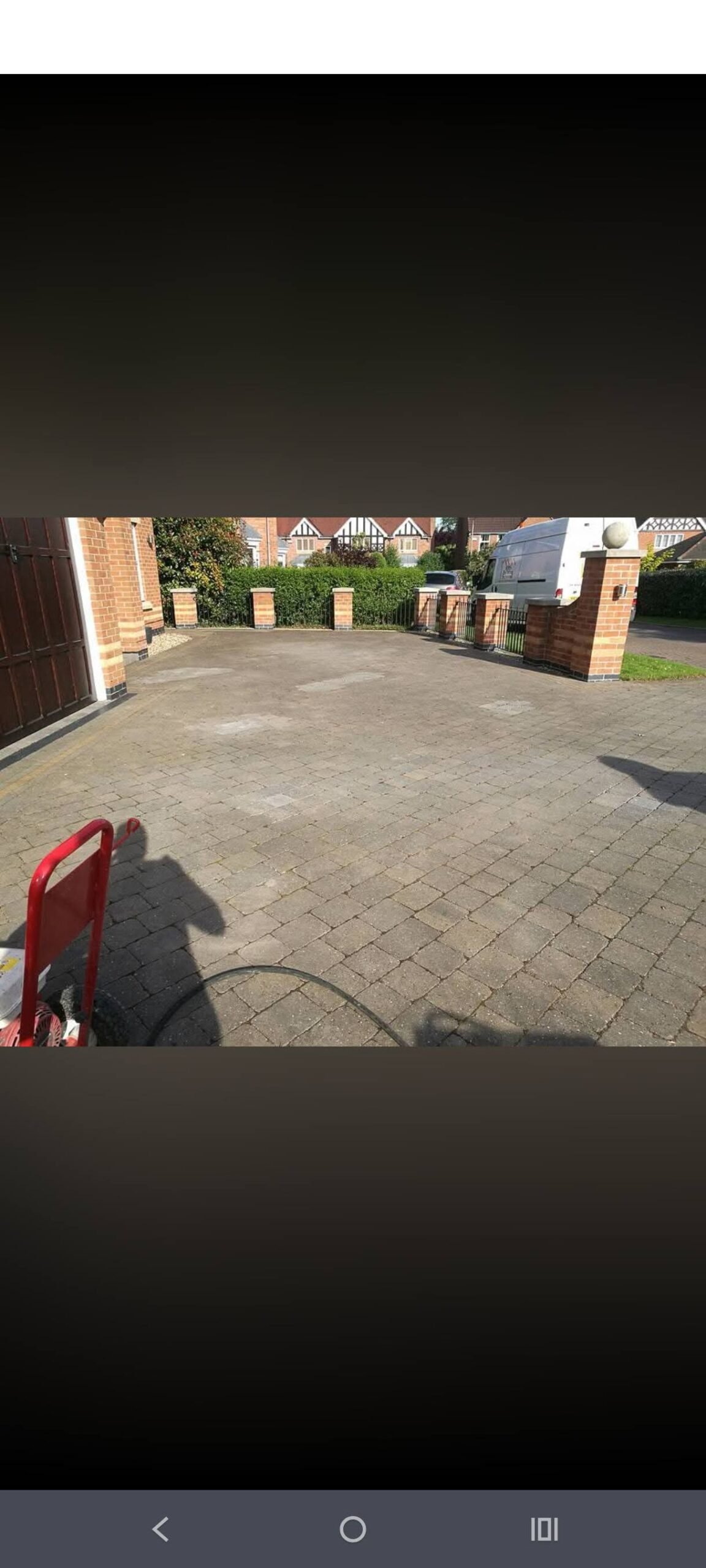
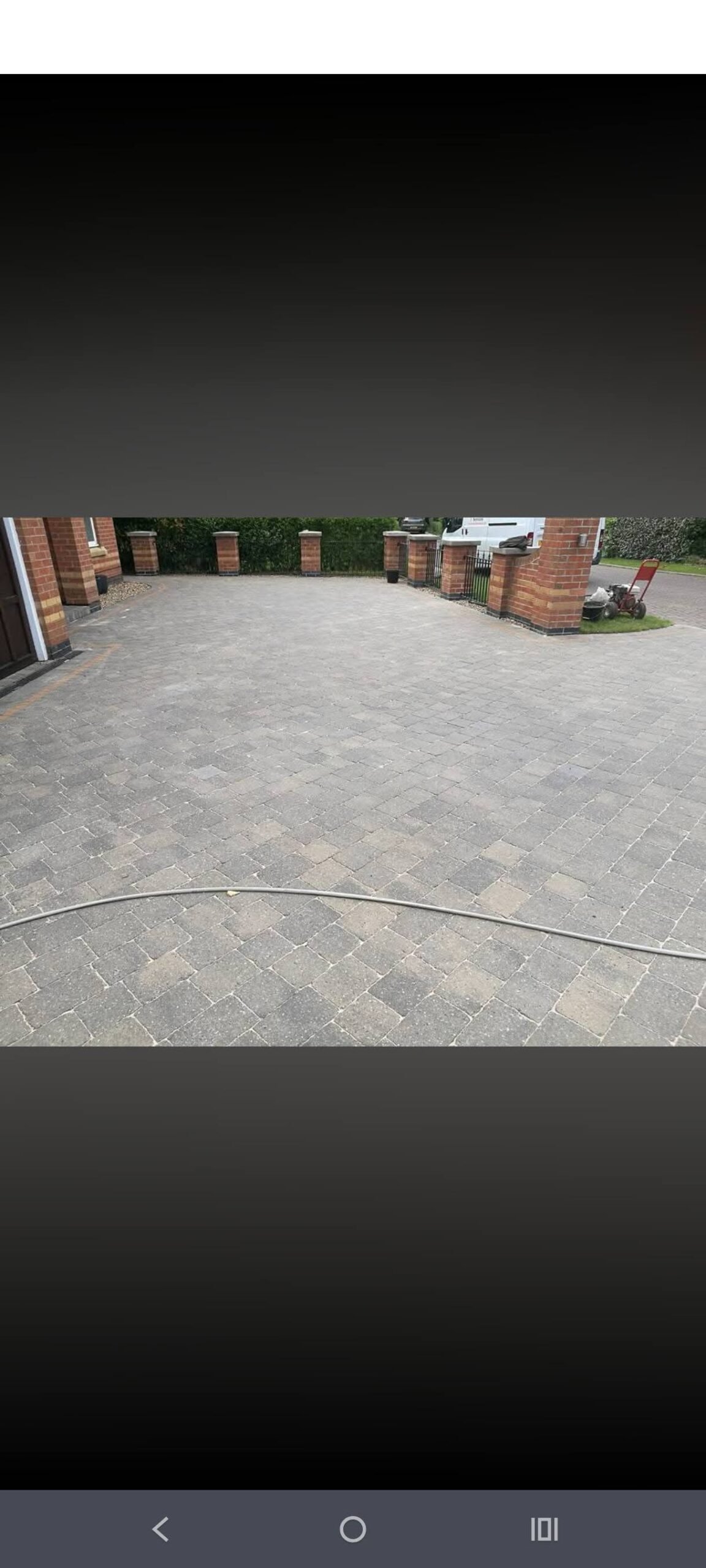
Block paving cleaned and re-sanded in Radcliffe on Trent
These RMS photographs show the surface-cleaning and re-sanding stages of care for existing block paving. Local lifting, bedding or drainage repairs are assessed for the individual driveway. Read about this Radcliffe on Trent job.
Send photographs for a quotation.
Include your postcode, a short description and clear photographs of the area.
Planning your block paving restoration and repairs
What is involved in repairing a sunken section?
The affected blocks are assessed and, where suitable, lifted so the support underneath can be examined. Bedding and levels are corrected as appropriate before the blocks are relaid. Edge restraint and drainage also need consideration; simply brushing more sand over a low area will not level it.
Can cleaning be enough when the blocks are stable?
If the blocks are sound and the concern is dirt or depleted joint sand, block paving cleaning and re-sanding may be the suitable route. Repair work is assessed separately from the surface clean.
Can you reuse my existing blocks?
We assess whether the existing blocks are sound enough to retain and whether damaged sections need replacement. Older blocks, previous repairs and colour variation may remain visible after the work. Photographs of the whole drive and the affected section help us assess the options.
How are the joints finished?
Suitable conventional block paving can be replenished with kiln-dried sand once the cleaned paving and joints are properly dry. Any proposed sealing needs a separate compatibility and preparation review. See our jointing and aftercare options.
Find out who carries out the work at RMS, or send your enquiry. Photographs are optional.
Block paving restoration areas we cover
We assess sunken blocks, failed joints and worn paving before planning cleaning and local repairs. Choose your area below and send photographs to discuss suitable restoration and re-sanding options.
- Brinsley
- Eastwood
- Kimberley
- Nuthall
- Ilkeston
- Heanor
- Hucknall
- Nottingham
- Arnold
- Gedling
- Mapperley
- Radcliffe-on-Trent — cleaning & re-sanding
- Ravenshead — cleaning & re-sanding
Choose an area for local service information. Where a local project is featured, its photographs or video appear on that page. Browse the full Our Work gallery.
See our full list of areas we cover, or request a quotation with your postcode and photographs.